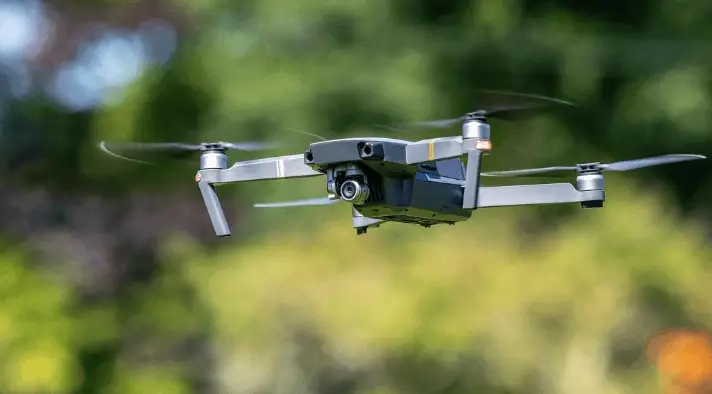

Defense drones have become essential tools for reconnaissance, surveillance, and logistics, but their missions still depend on one critical component: the battery.
In desert operations, on hot runways, and inside sealed equipment bays, temperatures routinely exceed what standard commercial batteries are designed to handle. The result is shortened flight times, accelerated degradation, and in the worst cases, mission-ending failures.
This article explains how high-temperature battery design solves these problems, and what to look for when specifying a battery for a defense UAV.
Why Heat Is the Enemy of Standard Drone Batteries
A standard lithium polymer cell is happiest between roughly 15°C and 35°C. Take that same cell to a desert environment where ambient air reaches 45-50°C, and internal pack temperatures climb higher still under discharge load, and three things happen. Usable capacity drops as internal resistance behavior changes. Degradation accelerates dramatically: as a rule of thumb, every 10°C increase in operating temperature roughly doubles the rate of capacity fade. And safety margins shrink, because the cell is operating closer to the temperatures at which separator and electrolyte stability become a concern.
For a commercial drone, this means shorter flights and more frequent battery replacement. For a defense drone on an operational mission, it can mean an aborted sortie, an outcome no procurement officer wants to explain.
What Makes a Battery ‘High-Temperature’?
A high-temperature battery is not simply a standard battery with a better spec sheet. It is a system-level design choice that starts at the cell and ends at the enclosure:
Cell Selection
High-temperature designs begin with cells whose chemistry and construction are rated for extended operation at elevated temperatures, typically featuring more thermally stable electrolyte formulations, robust separators with higher shutdown temperatures, and conservative internal design margins. The trade-off is usually some energy density, which is why cell selection must match the actual mission profile rather than the most impressive datasheet number.
Thermal Design at the Pack Level
The pack architecture determines how heat moves. Good high-temperature packs use thermally conductive paths that spread heat away from hot cells, spacing and materials that prevent one hot cell from heating its neighbors, and enclosures designed for the radiation and convection conditions of the actual installation, not a lab bench.
A BMS That Understands Heat
A Battery Management System designed for high-temperature operation does more than cut off at a threshold. It monitors temperature at multiple points across the pack, derates charge and discharge currents progressively as temperatures climb, and logs thermal history so that maintenance crews can see how hard the battery has actually worked. For a general introduction to what a BMS does and when you need one, see our guide: Do You Really Need a BMS?
Where High-Temperature Batteries Matter Most
Not every mission needs a high-temperature pack, but for some, it is the difference between mission success and failure. Long-range reconnaissance in hot climates demands consistent power delivery over hours of flight with no opportunity to cool down. Desert border patrol exposes drones to ground-level heat during launch and recovery, which are often the hottest parts of the mission profile. Confined launch environments, vehicle-mounted launchers, sealed canisters, and transport cases left in the sun can pre-heat a battery before the mission even begins. In each of these cases, a battery designed for the thermal reality of the mission delivers longer flights, more predictable performance, and fewer failures.

Compliance: UN 38.3 and Beyond
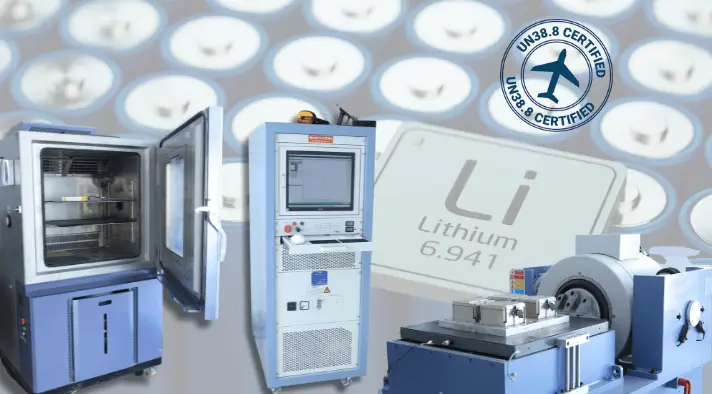
Any lithium battery intended for transport must pass UN 38.3 testing, a series of altitude, thermal, vibration, shock, and electrical tests that verify the battery can be shipped safely. For defense applications, this is the entry ticket, not the finish line: military customers typically add their own environmental and safety requirements on top of it, including extended temperature cycling, ingress protection, and crash safety. A battery partner serving the defense market should be able to show a clear compliance and test path from the first prototype, not scramble for certification after the design is frozen.
Designing the Right Pack, Not the Biggest One
It is tempting to solve heat problems by simply adding capacity, a bigger battery that can afford to lose some performance. In practice, oversizing adds weight that shortens flight time, cost that strains the program budget, and thermal mass that can actually make heat management harder. The better approach is to define the real mission-profile currents, durations, ambient conditions, and charge turnaround times, and design the pack to meet them with appropriate margins. We cover this philosophy in depth in our guide to avoiding over-designed battery packs, and the full development process in Custom Battery Pack Design: The Full Process Explained.
What’s Next for Drone Battery Technology
The next generation of defense drone batteries is taking shape around three developments. Improved cell chemistries, including semi-solid and eventually solid-state designs, promise wider temperature windows and better safety margins. Smarter BMS platforms are moving from reactive protection to predictive health management, flagging cells that are trending toward failure before they cause problems. And tighter battery-airframe integration is turning the battery from a swappable box into a structural, thermally managed part of the aircraft. Programs specifying batteries today should ask suppliers not just what they can deliver now, but how their roadmap tracks these developments.
Conclusion
High-temperature batteries are not a luxury upgrade for defense drones operating in hot environments; they are a mission requirement. The right solution combines cells selected for thermal stability, pack-level thermal design, a BMS that manages heat intelligently, and a compliance path that satisfies both transport regulations and military standards. AMICELL designs and manufactures custom battery packs for defense UAV applications, from requirements definition through qualification testing. Contact our engineering team to discuss your platform’s thermal and power requirements.
Frequently Asked Questions (FAQ)
What is a high-temperature drone battery?
A high-temperature drone battery is a battery pack designed to operate reliably in elevated ambient temperatures (typically 45-60°C and above). It combines thermally stable cell chemistry, pack-level thermal design, and a BMS with progressive thermal management rather than simply using standard cells with optimistic ratings.
How does heat affect drone battery life?
Heat accelerates battery degradation significantly, roughly doubling the rate of capacity fade for every 10°C increase in operating temperature. It also reduces usable capacity during flight and shrinks safety margins, which is why thermal design is critical for drones operating in hot climates.
What is UN 38.3, and why does it matter for drone batteries?
UN 38.3 is the international safety standard that lithium batteries must pass before they can be transported. It includes altitude, thermal, vibration, shock, and electrical abuse tests. For defense applications, it is a baseline requirement, with military customers typically adding further environmental and safety testing.