| A light, engineering-minded look at how safety is built: not as one magic component, but as a layered architecture. |
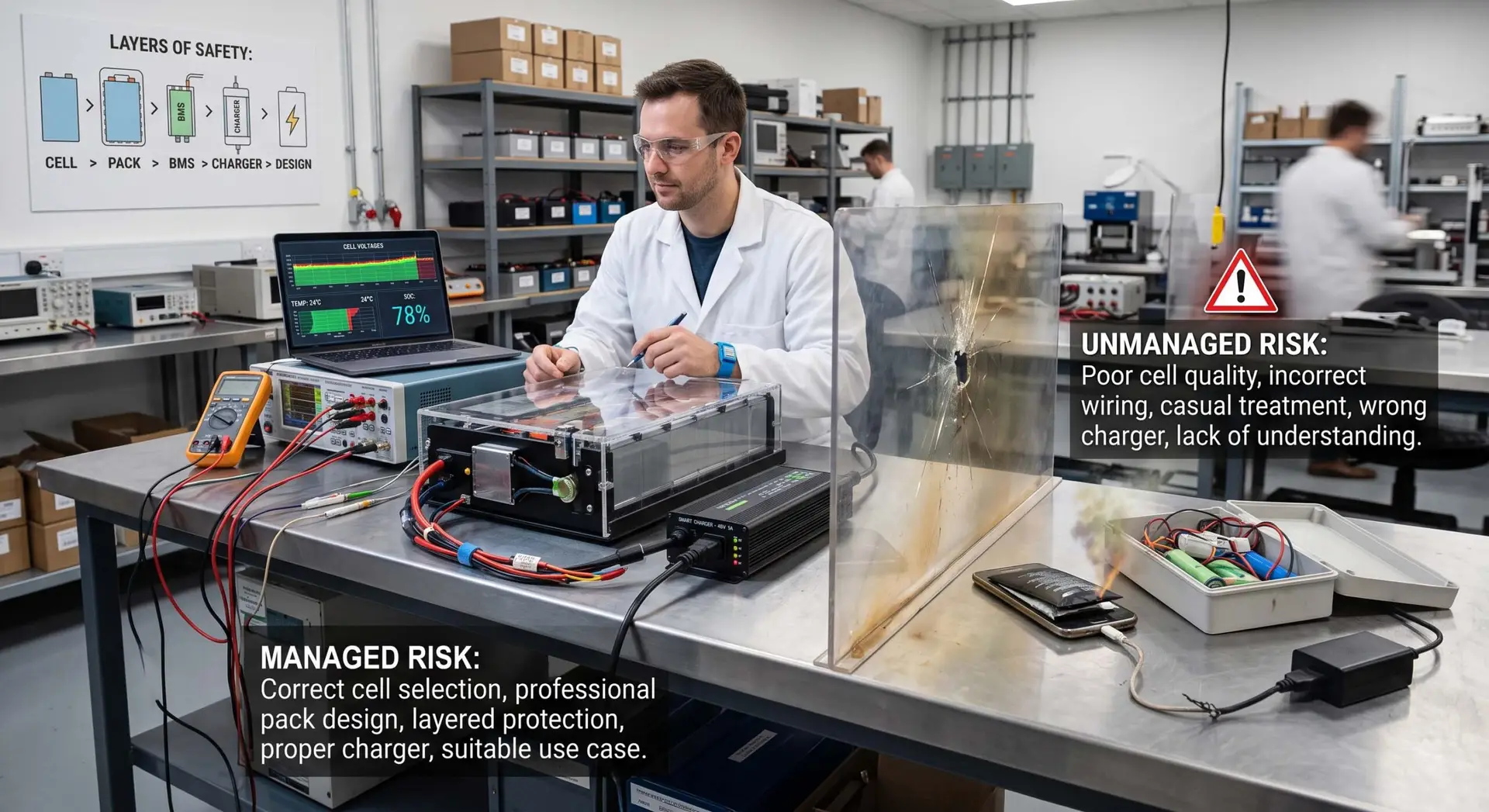
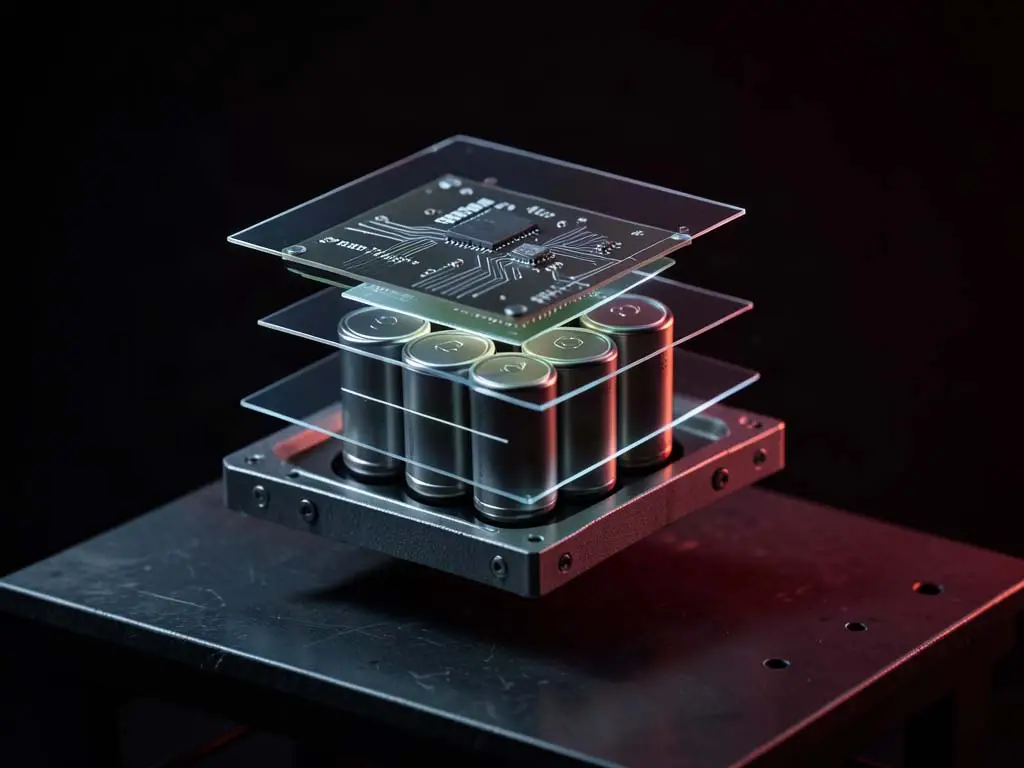
Li-Ion battery packs are a bit like racehorses: strong, efficient, relatively light, and capable of impressive performance, but they need reins, boundaries, and a proper track. When designing a lithium battery pack, the question is not only “How much energy can it deliver?” but also “How safe can it be?” The short answer: very safe, but never with zero risk. The engineering answer: safety is built in layers like an onion, a suit of armor, or an air-defense system. One layer detects, another limits, a third disconnects, and a fourth tries to prevent a local event from becoming a system-level drama.
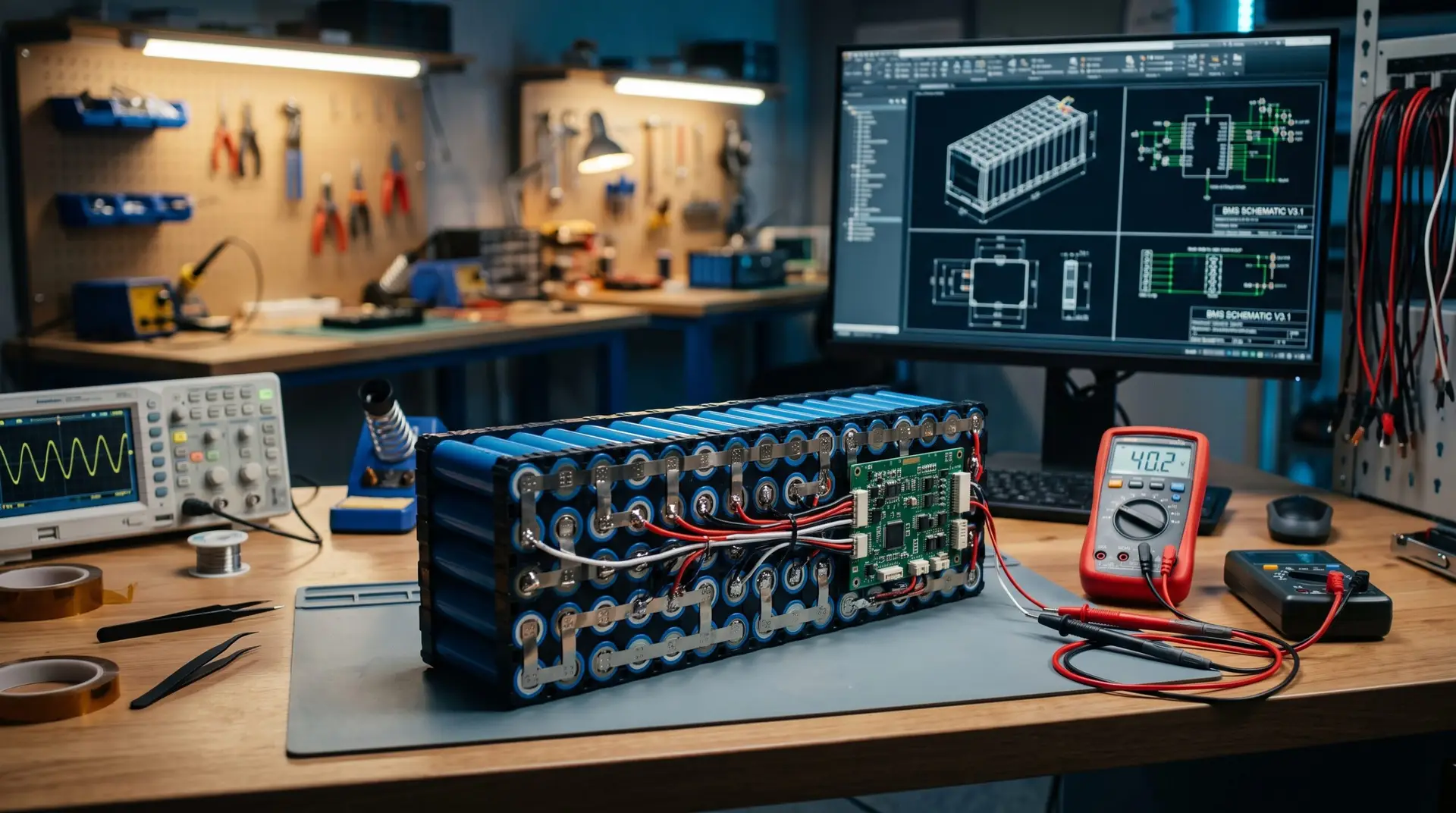
A Li-Ion pack is not a single component. It is a system: cells, conductors, welds, insulation, sensors, electronics, enclosure, charger, software, and sometimes pressure relief or thermal management. Safety is not a single component either. It is an architecture.
Level 1: Choosing the Right Cell, the “don’t do something silly at the start” layer
Safety starts long before the first cell is connected. It starts with the chemistry and the cell itself. NMC and NCA cells usually offer high energy density, but they demand more attention to thermal behavior and protection. LiFePO4 is generally more thermally forgiving, at the cost of lower energy density. LTO is the tank of the lithium family: very safe, long-lived, and fast-charging, but put it into a man-portable system, and you quickly understand why it is less popular. It can be significantly larger and heavier than an NMC pack for the same usable energy, even before we discuss price.
Beyond chemistry, the cell manufacturer, authenticity, batch consistency, age, internal resistance, current rating, and fit to the application matter enormously. A high-quality cell from a known manufacturer is like a good foundation. A cheap, undocumented cell is like building on sand and then investing in fire protection, insurance, and a small prayer before every charge.
Level 2: Staying Within Healthy Boundaries
Even the best cell has boundaries. Each cell has voltage, current, and temperature ranges where it feels “at home”. The closer we operate to the edges high charge voltage, deep discharge, high current, or high temperature the faster aging and risk increase.
In simple words: the pack does not always have to drink the entire “fuel tank” down to the last drop. In systems such as ESS or EV, where long service life and $/Wh are key metrics, this is almost a discipline of its own: leave margins, protect the cell, and gain longer life. In other applications for example, military systems the mission may be more important than chemical politeness, and sometimes the design really does plan to use the fumes.
Level 3: Passive Protection, the things that do not need software
Safety is not based only on electronics. Fuses, thermal cutoffs, proper insulation, creepage and clearance, flame-retardant materials, cell separation, good welds, proper conductors, and prevention of cable chafing are the quiet soldiers of battery safety.
Their purpose is simple: if something goes wrong, does the fault stay small? Does a local short remain local? Does a hot cell stay a hot cell, or does it invite the neighbors to the party? A good fuse has one major advantage: it never asks for a firmware update, never enters a boot loop, and usually fails at exactly the level it was designed for.
Level 4: BMS – the Electronic Bodyguard
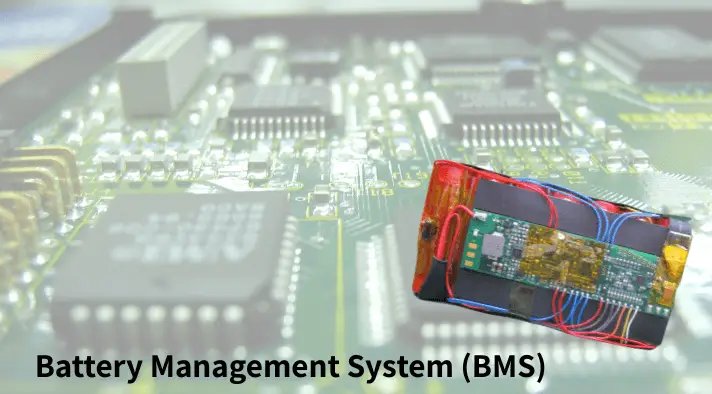
The BMS is one of the most important protection layers in rechargeable Li-Ion packs. It measures voltages, currents, and temperatures, performs cell balancing, estimates state of charge, detects abnormal conditions, and often communicates with the host system.
When a cell approaches overvoltage, the BMS can stop charging. When a cell drops too low, it can stop discharge. When current or temperature is excessive, it can warn, limit, or disconnect. In small packs this may be done with MOSFETs. In larger systems it may control contactors, relays, chargers, and power converters.
But a BMS is not magic, not a perfect missile-defense system, and not an insurance policy against poor design. It is a very good bodyguard but even the best bodyguard cannot fully protect someone determined to run into traffic.
Level 5: Thermal Management
Heat is one of the great enemies of Li-Ion batteries. It accelerates aging, increases resistance, changes electrochemical behavior, and in extreme cases may become part of a chain that leads to thermal runaway.
Thermal management is therefore not a comfort feature; it is safety. Proper heat spreading, good thermal contact, spacing between cells, temperature sensors in the right locations, current derating by temperature, ventilation, heat sinks, or heat conduction to the enclosure can all reduce risk. A pack tested only in an air-conditioned room is like an athlete tested only while sitting on the sofa: pleasant, but not enough.
Level 6: Failure Containment
Mature engineering assumes that sometimes things go wrong. A cell may fail. A weld may loosen. A charger may misbehave. A user may become creative in ways the manual did not intend. High-level safety therefore asks not only “How do we prevent failure?” but also “What happens if it still occurs?”
This is where mechanical design, pressure relief, venting direction, cell separation, thermal barriers, controlled gas paths, and user protection come in. The goal is not to make a failure event festive. The goal is to make it boring, limited, predictable, and preferably far away from the user.
Level 7: Charger, Use, and Maintenance
A safe pack can become unsafe when charged with the wrong charger, stored incorrectly, over-discharged, mechanically damaged, or ignored after abuse. Battery safety does not end inside the enclosure; it continues through the charger, operating instructions, maintenance, storage, and periodic inspection.
The charger must match the chemistry, number of cells, end voltage, charge current, and BMS communication if used. Proper use includes avoiding charge at extreme temperatures, inspecting the pack after impact, storing at an appropriate voltage, and retiring a pack that is swollen, damaged, overheating, or behaving strangely. A safe battery is not only a good product, but it is also a product used correctly.
So, How Safe Can We Make It?
One practical way to think about safety is as a ladder:
| Level | Typical Design | Suitable For |
| Basic | Quality cell, fuse, insulation, suitable charger | Simple, low-risk products |
| Good | PCM or basic BMS, voltage/current/temperature protection, sometimes cell balancing | Most professional Li-Ion packs |
| High | BMS, communication, logs, qualification testing | Industrial, medical, military, robotics |
| Very high | Redundancy, thermal management, containment, alerts, cell separation, extreme testing, containment or extinguishing measures as applicable | Critical systems, EV, energy storage |
| Extreme | Dedicated architecture, multi-layer monitoring, full risk analysis, extensive qualification | Applications where failure is almost intolerable |
Conclusion
Li-Ion safety is not a button added at the end of the design. It is a design philosophy that starts with cell selection and ends with user instructions. It combines the right chemistry, conservative operating limits, a suitable BMS or PCM, passive protections, thermal management, mechanical design, a correct charger, and responsible use.
One could argue that many Li-Ion safety challenges begin with the demand for minimum weight and volume. If size and mass were unlimited, we could build a huge pack that barely warms up, fully separate every cell, and add internal suppression measures for dessert. But we live in the real world. The systems we develop always want the battery to be stronger, smaller, lighter, and denser in energy. The greater the consequence of failure, the higher we must climb on the safety ladder.
In the end, a safe Li-Ion battery is not one where “nothing can ever happen.” There is no such thing. A safe battery is designed so the probability of an event is low, the event is detected early, the damage is limited, and the system behaves predictably even when things stop behaving nicely.
The author has seen batteries ignite once or twice. It is a very educational experience, the kind one prefers to learn from somebody else.